
Dental Crowns Explained: Types, Materials And Costs
Dental Crown
A dental crown is a custom-made cap that covers a damaged, weakened, or heavily restored tooth. Crowns restore the tooth's strength, shape, appearance, and function, helping patients smile and chew with confidence.
With several crown materials available, patients often ask: "Which crown is best for me?" The answer depends on the tooth being treated, cosmetic expectations, durability requirements, and budget.
In this guide, we'll explain the different types of dental crowns, their advantages, typical costs and the situations where each is most suitable.
What Is a Dental Crown?
A crown completely covers the visible portion of a tooth above the gum line. Crowns are commonly recommended when:
- A tooth has a large filling and insufficient remaining tooth structure.
- A tooth has undergone root canal treatment.
- A tooth is cracked or weakened.
- A dental implant requires a replacement tooth.
- A tooth is severely worn down.
- Cosmetic improvement is desired for misshapen or discoloured teeth.
Types of Dental Crowns
A. All ceramic Crowns
1. Zirconia Crowns
Material: Zirconium dioxide ceramic
Advantages:
- Extremely strong and durable
- Highly resistant to fractures
- Metal-free and biocompatible
- Suitable for patients who grind their teeth
- Natural tooth-coloured appearance
Best Used For:
- Back teeth (molars and premolars)
- Patients with heavy biting forces
- Implant crowns
- Full-mouth rehabilitation cases
Typical Cost (Surrey Dental Practice):
£680 per crown
Lifespan
15-20 years or more
Zirconia crowns have become one of the most popular choices due to their excellent balance of strength and aesthetics.
2. E-Max Crowns (Lithium Disilicate)
Material: Lithium disilicate glass ceramic
Advantages:
- Exceptional aesthetics
- Highly translucent and natural-looking
- Metal-free
- Excellent colour matching
Best Used For:
- Front teeth
- Smile makeovers
- Cosmetic dentistry cases
- Patients seeking the most natural appearance
Typical Cost (Surrey Dental Practice):
£800
Lifespan
15-20 years or more
E-Max crowns are considered type of all ceramic Crowns and often considered the gold standard for cosmetic front tooth restorations because they closely mimic natural enamel.
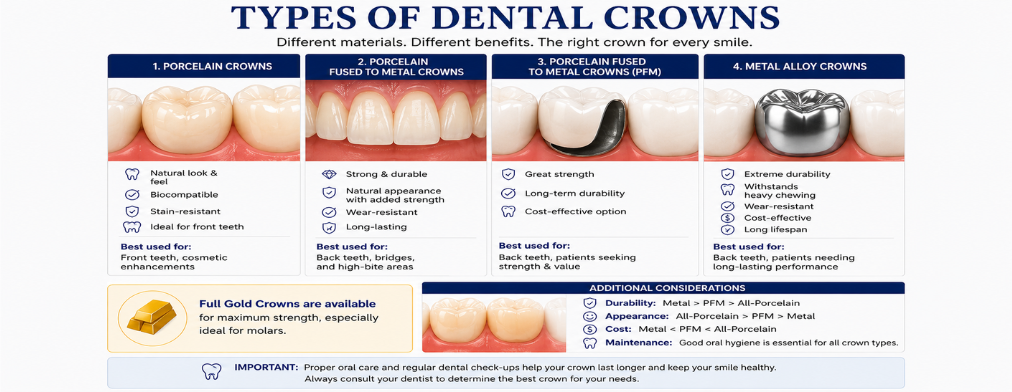
B . Porcelain-Fused-to-Metal (PFM) Crowns
Material: Metal substructure covered with porcelain
Advantages:
- Good strength
- Long clinical history
- Suitable for many situations
Disadvantages
- Dark metal margin may become visible over time
- Less natural appearance than modern ceramic crowns
- Porcelain can chip from the metal framework
Best Used For:
- Back teeth
- Patients requiring a cost-effective solution
Typical Cost (Surrey Dental Practice):
£580
Lifespan
10-15 years or more
PFM crowns were once the standard option but are increasingly being replaced by all-ceramic alternatives.
C. Full Metal Crowns:
Material: Non precious alloy
Advantages:
- Outstanding durability
- Minimal wear on opposing teeth
- Requires less tooth reduction
- Rarely fractures
Disadvantages:
- Metallic appearance
- Not suitable for visible areas
Best Used For:
- Back molars
- Patients prioritising longevity over aesthetics
Typical Cost (Surrey Dental Practice):
£450
Lifespan
15-20 years or more
Full gold crowns are available; however, their cost can vary considerably as it depends on the current market price of gold. Gold crowns remain one of the most durable restorations available in dentistry.
E. Temporary Crowns
Material: Acrylic or resin
Purpose: Temporary crowns protect the prepared tooth while the permanent crown is being manufactured.
Typical Duration:
1–3 weeks
Cost:
Usually included in the cost of the final crown treatment.
Temporary crowns are not intended as long-term restorations.
How Long Do Dental Crowns Last?
Most modern crowns last between 15 and 20 years, although many can last significantly longer with proper care.
To maximise the lifespan of your crown:
- Brush twice daily with fluoride toothpaste. Floss around the crown every day.
- Attend regular dental examinations.
- Avoid chewing ice or hard objects.
- Wear a nightguard if you grind your teeth.
Which Crown Is Right for You?
The ideal crown depends on your individual circumstances.
- For maximum aesthetics: E-Max crowns.
- For exceptional strength: Zirconia crowns.
- For long-term durability: Gold crowns.
- For a balance of cost and function: PFM crowns.
- For front teeth: E-Max or PFM Crowns.
- For molars and heavy biting forces: Zirconia crowns.
A thorough examination, including X-rays and assessment of your bite, allows your dentist to recommend the most suitable option for your needs.
Book a Crown Consultation
If you have a damaged, worn, or heavily restored tooth, a dental crown may be the ideal solution to restore both function and appearance.
At Surrey Dental Practice, we offer high-quality all types crowns designed to provide long-lasting, natural-looking results. Our experienced team will discuss all available options and help you choose the most appropriate restoration for your smile and budget.